
Data 4 Healthcare: A Clinical Data Platform Built for Standardization
A healthcare data platform rebuilt so patient records from different systems could finally be read the same way.
Visual Overview & Build Assets
The problem
Data 4 Healthcare's clinical records lived across systems that didn't share a common format — different field names, different structures, sometimes different definitions of the same data point. Every time a new source needed to be added, someone had to manually reconcile its fields against the last one before any of it could be trusted. That's manageable once or twice, but at platform scale it turns onboarding a new clinical system into a multi-week exercise instead of a configuration change. The deeper cost wasn't the integration labor itself — it was that no two records could be compared with confidence until that reconciliation was finished, which slowed everything downstream of it, from reporting to day-to-day clinical review. A platform meant to be a single source of truth was instead a set of sources that each needed translating first, which is a fragile place for a healthcare data system to sit long-term.
What we built
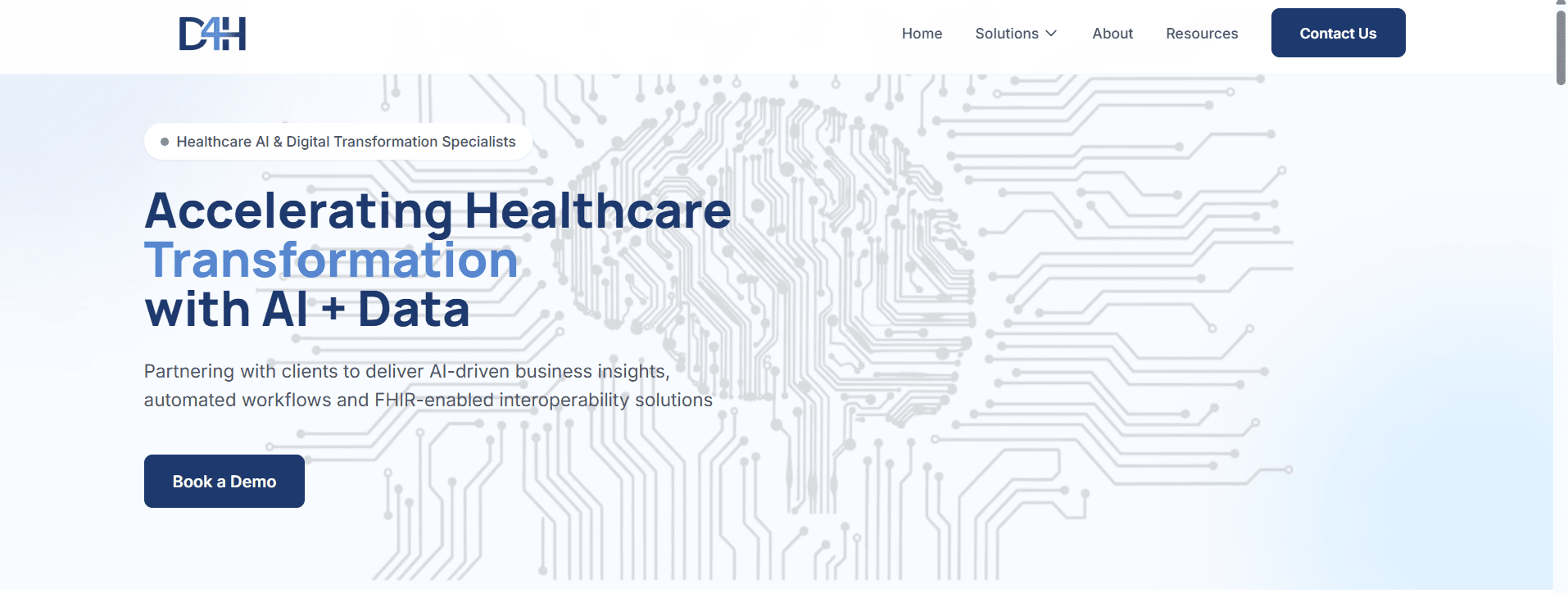
We built the platform on PHP, pulling records from multiple sources and normalizing them into one standardized structure before anything reaches a screen, so downstream logic never has to know which system a record originally came from. The templating layer is modular by design — a new data type gets a new template definition, not a rewrite of the rendering logic that already works for everything else. That separation is what makes standardization sustainable instead of a one-time cleanup that quietly drifts again in six months, which is what tends to happen when normalization is treated as a project rather than an architecture decision made up front. GSAP handles the interface motion because clinical staff scanning dozens of records a day notice jank immediately, and a heavier animation approach would have fought the page's real job, which is staying out of the way of the data rather than calling attention to itself. Keeping motion deliberately restrained was as much a decision about the platform's daily users as it was about visual polish.
Architecture & Engineering Highlights
The underlying technical foundation engineered into the Data 4 Healthcare build.
Performance First
Optimized for core web vitals, sub-2s load times, and fluid 60fps animations.
Enterprise Security
Sanitized data inputs, encrypted credentials, and strict permission scoping.
Custom Data Pipelines
Custom APIs connecting front-end interfaces to live backend data sources.
Modular Architecture
Decoupled component architecture designed to scale seamlessly with user growth.
Where it stands today
The platform now runs as Data 4 Healthcare's core data layer, not a parallel system staff have to double-check against an older one. Connecting a new clinical system today means mapping its fields to the existing standardized schema, not building bespoke integration logic from scratch the way the old process required. That shift — from custom integration work to configuration — is what keeps the platform from getting harder to maintain every time it grows, which is the exact problem the original setup ran into as the number of connected systems increased over time.
Key Takeaways & Business Impact
Core strategic lessons extracted from engineering the Data 4 Healthcare solution.
Data Standardization Over Bespoke Hacks
Establishing unified data schemas up front eliminates multi-week integration delays when scaling connected systems over time.
Conversion-Driven Interface Polish
Streamlining visual hierarchy and eliminating UI jank keeps daily users focused on core workflows without distraction.
End-to-End In-House Execution
Single team scoping, engineering, and launching ensures zero technical debt or communication gaps during deployment.
Questions about this project.
Everything you need to know about our process, deliverables, timelines, and technical architecture.
Have a custom question?
We usually respond within 2 hours.
PHP for the backend with a modular templating layer, and GSAP for interface motion. The templating approach was chosen specifically so new clinical data sources could be onboarded through configuration rather than custom code each time, since that was the exact bottleneck the previous setup had, and it's the piece that determines whether standardization actually holds as the platform keeps growing.
Have a project like this?
Want a similar build? Explore our custom website development service capabilities.